
And at the center of the body is the heart, the heart of Senebtisi, a woman of the twelfth dynasty. And fortunately, it stopped beating centuries before the mortal remains in which it pulsated were exposed to the gaze of the barbarians of the Western world
– A Lady of the Twelth Dynasty, The Lotus Magazine – 1912
Today I would like to take you for a walk on the banks of the Nile River in Egypt. Particularly tempting in any month of the year, but especially during this shy March, which still does not want to give us too many of its initial spring wonders.
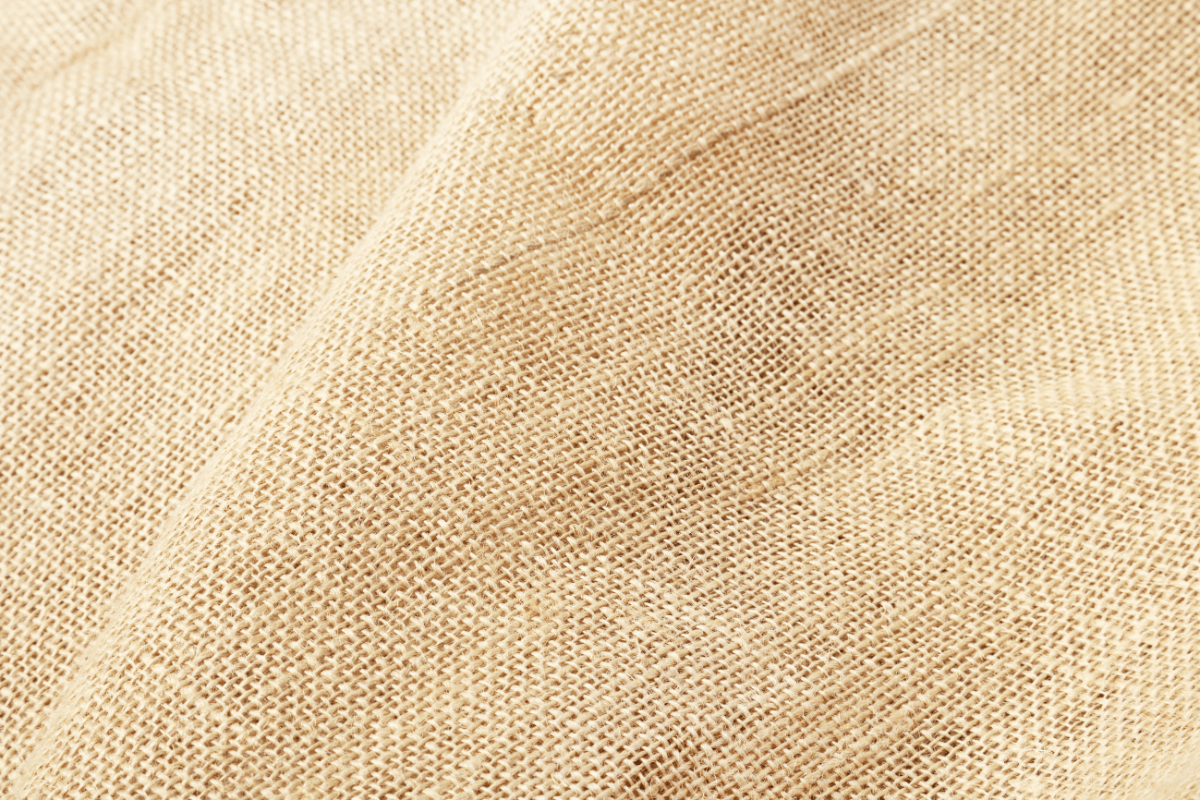
When the mummy of Senebtisi, a slender woman of about fifty years old who died in 1800 BC, was found in a tomb inside a pyramid at El-Lisht, it was immediately clear to everyone that she had been buried with extreme care. The innermost sarcophagus was draped with a dozen linen shawls, carefully laid, and whose folds held a multitude of treasures. The priests had wrapped it in linen, with fabrics of 150 threads per centimeter.
Flax in Ancient Egypt
Linen fabrics accounted for a substantial portion of a person’s private capital. They were even kept in special chests, extremely decorated.
The provenance of the fabrics was crucial: the linen that bandaged Ramses III contained an inscription specifying that it had been woven by the daughter of the high priest Amun Piankh. From ancient Egypt, with its mysteries and traditions, to the present day, the step is very long, but linen has recovered its ancient nobility and, today, it has returned to being a highly sought-after and valuable material.
Of Flax And Its Properties
The latest edition of Premiere Vision in Paris confirmed that the Egyptian pharaohs and their priests were certainly not wrong. This is not a new trend but one that is constantly growing, to the point that several European countries are starting new initiatives to increase flax cultivation.
Breathable, very resistant (and therefore with a longer life cycle than other natural textile
materials), hygroscopic (can absorb moisture from the atmosphere), thermoregulator (keeps body temperature constant for longer), does not get dirty easily (the fiber has a smooth surface), dries quickly, recyclable and biodegradable (in its natural state it can start to decompose in two weeks). I would say that the good qualities are practically all there.
The fact that it maintains the crease is now a negative element that can be largely overcome thanks to non-impactful finishing treatments that make the fabric softer (and therefore no longer ‘woody’) and not ‘wrinkled’. In addition, one hectare of flax-grown land can remove 3.7 tons of carbon dioxide from the atmosphere.
The flax plant enriches the humus of the soil and can be irrigated with rainwater alone. But another wonderful feature of linen fabrics is that they can be dyed with color variations of all kinds and types, creating infinite color palettes.
Once again, the ancients teach the moderns. Once again, it is nature that brings to light the ‘novelties’.